Pickles and Jesus PNG: A Designer’s Real-World Embroidery Review
Let’s be honest—when I first opened Pickles and Jesus PNG, I paused. Not because it was confusing, but because it landed with such a distinct, unapologetic personality: playful, irreverent, oddly comforting. As an embroidery designer who’s stitched everything from nursery monograms to boutique sweatshirt collections, I don’t just scan files—I imagine them stitched, worn, gifted, washed, and lived with. So when a client asked me to embroider this design onto a set of linen kitchen towels for a small-batch holiday pop-up, I treated it like a real project test—not a theoretical exercise.
First Impression: Charm With Clear Intent
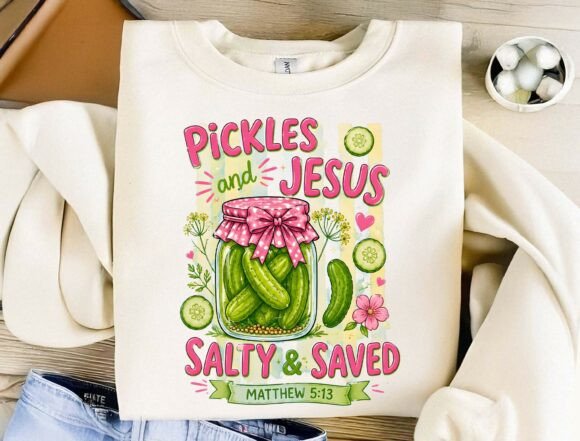
The composition is tight and centered: two pickles flank a stylized, friendly “Jesus” in rounded script, all within a soft circular frame. There’s no background fill, no extra flourishes—just confident line work and balanced negative space. It reads instantly at 3–4 inches wide, which makes it ideal for tote bag design, apron embroidery, or even a small embroidered patch. The mood? Warm humor with sincerity—not snarky, not sacred, but quietly human. That balance matters deeply when you’re creating personalized gifts or small shop products that need to resonate across generations and beliefs.
How It Stitches: Practical Notes From the Hoop
I ran Pickles and Jesus PNG on three substrates: medium-weight cotton twill (for tote bags), French terry (for sweatshirts), and lightweight baby jersey (for onesies). Here’s what stood out:
- Stitch density feels intentional—not overly dense, but substantial enough to hold shape on textured fabrics. No floaters or thread nests on my Bernina 790, even at moderate speed.
- The lettering holds up beautifully in satin stitch, especially the curved “J” and “s” in “Jesus.” No thinning or breakage—critical for commercial embroidery where consistency builds trust.
- The pickle outlines use clean running stitch with subtle tapering—giving dimension without overloading the design. On dark fabric, I paired it with bright lime-green and cream thread; on light, navy and mustard worked surprisingly well.
- No tiny interior details (like pickle seeds or facial features) mean fewer headaches on small hoop sizes or curved surfaces like caps. This isn’t a design that fights you—it collaborates.
Where It Shines (and Where to Pause)
Pickles and Jesus PNG excels in custom apparel with character: think embroidered sweatshirts for church potlucks, baby bibs for baptism gifts, or tea towels sold at a local farmers’ market. Its scale and clarity make it perfect for Etsy sellers building a cohesive brand around faith-infused whimsy—or crafters making holiday embroidery that avoids cliché.
But—and this is key—it’s not universally flexible. Avoid it on stretchy fabric without proper cutaway stabilizer (I used Sulky Soft ‘n Sheer + tear-away combo on the onesies). On ultra-thin fabrics like voile or rayon challis, the outline weight can telegraph through unless you reduce top tension slightly. And while it works on dark fabric, skip black-on-black combos—the contrast needs breathing room to land its gentle wit.
Customer Reaction & Product Value
At the pop-up, people smiled first, then leaned in. One woman bought three towels—one for herself, one for her pastor husband, one for her atheist sister “because she’ll get the joke *and* the love.” That’s the sweet spot: Pickles and Jesus PNG doesn’t preach. It invites. That kind of quiet resonance lifts perceived value—customers pay more for handmade products that feel seen, not sold.
For craft business owners, that translates to stronger brand consistency: whether stitched on a pillow cover or a denim jacket, the design carries warmth and intention. It also photographs exceptionally well in printable mockups, especially flat-lay shots with rustic wood or marble backdrops—no heavy editing needed.
Design Integrity Checks You Should Run
Before stitching your first client order or listing a finished product, do these five things:
- Test on scrap fabric matching your final substrate—especially if using applique design techniques or layered stabilizers.
- Review thread color contrast in natural light *and* under warm store lighting. What reads clearly on screen may mute on oat-colored linen.
- Check small corners and curves in your embroidery software—look for stitch jumps or overlapping vectors that could cause puckering.
- Run a black-and-white mockup to confirm readability at smaller sizes (e.g., for a cap front or baby onesie chest).
- Verify licensing terms before selling physical items or bundling digital embroidery files—this is non-negotiable for Etsy sellers and digital product sellers.
A Final Thought for Makers
Pickles and Jesus PNG won’t replace your go-to floral monogram or minimalist logo—but it fills a very real gap: joyful, grounded, stitchable sincerity. It belongs on products people keep, not discard. On a kitchen towel, it becomes part of daily ritual. On a baby blanket, it whispers tenderness. On a tote bag carried through farmer’s markets and coffee runs, it sparks conversation—not controversy.
If you’re curating design assets for a growing small shop product line, or building a portfolio of machine embroidery design options that reflect real life—not just trends—this file earns its place. Not because it’s perfect, but because it’s human: imperfectly hopeful, lightly seasoned, and ready to be made real, one stitch at a time.